News

Why Screw-On Sealing Rings Prevent Spillage in Stainless Steel Water Bottles?

2026-10-09 0 Leave me a message

A stainless steel water bottle is only as good as its seal. You can have the finest double-wall vacuum insulation, the most durable 316 stainless steel, and the sleekest powder-coated finish. But if the bottle leaks when you toss it into your bag, none of that matters. Spillage is the most common complaint among water bottle users, and it is almost always caused by a failure of the sealing ring. The screw-on sealing ring is the component that creates the watertight barrier between the cap and the bottle neck. It is a small, inexpensive part, but it is the difference between a bottle that performs flawlessly and one that ruins your laptop. Understanding how the screw-on sealing ring prevents spillage is essential for consumers who demand reliability and for brands that want to avoid costly returns.


The screw-on sealing ring works through a combination of compression, material resilience, and geometric design. When the cap is screwed onto the bottle, the sealing ring is compressed between the cap and the rim of the bottle neck. This compression creates a physical barrier that water cannot penetrate. The effectiveness of the seal depends on the material of the ring, the amount of compression, and the precision of the mating surfaces. A well-designed screw-on sealing ring will maintain its seal through temperature changes, pressure fluctuations, and thousands of open-close cycles. This article will examine the science and engineering behind the screw-on sealing ring in Stainless Steel Water Bottles. We will cover the materials used, the compression dynamics, the design features that prevent leakage, and the testing that ensures performance. We will also provide detailed specifications for our Stainless Steel Water Bottles from our factory at Yongkang Jianyang Metal Co.,Ltd.

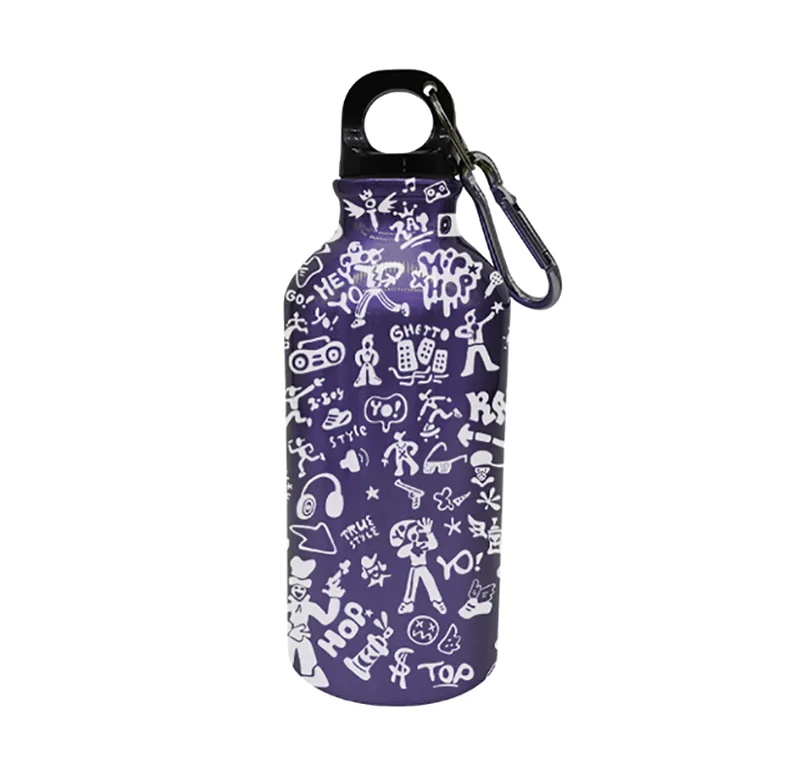
sport bottle


Table of Contents


1. What Is a Screw-On Sealing Ring and How Does It Work?

A screw-on sealing ring is a circular gasket that sits inside the cap of a Stainless Steel Water Bottle. When the cap is screwed onto the bottle neck, the sealing ring is pressed against the rim of the neck, creating a watertight seal. The ring is typically made from a flexible, resilient material such as silicone, EPDM, or nitrile rubber. The material must be able to compress under pressure and then return to its original shape when the pressure is released. This resilience is what allows the seal to be reused thousands of times without losing its effectiveness. The screw-on sealing ring is distinct from other types of seals, such as O-rings or flat gaskets, because it is designed to be compressed by the screwing action of the cap. The threads on the cap and the bottle neck convert the rotational motion of the cap into linear compression of the sealing ring. This mechanical advantage allows the user to generate a high sealing force with minimal effort.

The operation of the screw-on sealing ring can be broken down into three stages: engagement, compression, and sealing. During engagement, the threads on the cap and the neck mesh, and the cap begins to move downward. During compression, the sealing ring contacts the rim of the neck and begins to compress. The amount of compression is determined by the geometry of the threads and the thickness of the sealing ring. During sealing, the compressed ring fills the microscopic gaps between the cap and the neck, creating a continuous barrier that water cannot penetrate. The table below summarizes the stages of seal formation.

Stage Action Result
Engagement Threads mesh; cap moves downward Sealing ring approaches the neck rim
Compression Sealing ring contacts rim and compresses Ring fills the gap between cap and neck
Sealing Compressed ring creates a continuous barrier Watertight seal; no spillage

At Yongkang Jianyang Metal Co.,Ltd, our factory manufactures Stainless Steel Water Bottles with precision-engineered screw-on sealing rings. We use high-quality materials and tight manufacturing tolerances to ensure that every bottle we produce delivers reliable, leak-proof performance. Our sealing rings are designed to maintain their resilience over thousands of cycles, providing our customers with a bottle they can trust.


2. Why Does Material Selection Determine Sealing Performance?

The material of the screw-on sealing ring is the single most important factor in determining its sealing performance. The material must be flexible enough to compress and conform to the mating surfaces, but resilient enough to return to its original shape when the cap is removed. It must also be resistant to water, temperature extremes, and the chemicals found in beverages. The most common materials for sealing rings in Stainless Steel Water Bottles are silicone, EPDM, and nitrile rubber. Silicone is the most popular choice because it is chemically inert, odorless, tasteless, and resistant to a wide temperature range (-40°C to +200°C). It is also soft and flexible, which allows it to create a tight seal with minimal compression force. EPDM is another common material. It offers excellent resistance to water and steam, and it is more durable than silicone in some applications. Nitrile rubber is resistant to oils and fuels, but it is less commonly used in water bottles because it can impart a slight odor to the water.

The table below compares the key properties of these sealing ring materials.

Material Temperature Range Chemical Resistance Resilience Food Safe Typical Cost
Silicone -40°C to +200°C Excellent Excellent Yes Medium
EPDM -40°C to +120°C Good Very Good Yes Medium-Low
Nitrile Rubber -30°C to +100°C Good (oils) Good Yes (with certification) Low
TPE -40°C to +90°C Good Good Yes Low

At our factory, we use food-grade silicone for the sealing rings in our Stainless Steel Water Bottles. Silicone offers the best combination of flexibility, resilience, and safety. It does not leach any chemicals into the water, and it does not retain odors or flavors. We also offer EPDM sealing rings for applications that require higher durability or lower cost. Our sealing rings are tested for compression set, which is a measure of how much the material permanently deforms after being compressed. A low compression set indicates that the material will maintain its sealing force over time.


3. How Does Compression Create a Watertight Barrier?

Compression is the mechanism by which the screw-on sealing ring creates a watertight barrier. When the cap is screwed onto the bottle, the sealing ring is squeezed between two surfaces: the underside of the cap and the rim of the bottle neck. The amount of compression is determined by the thickness of the sealing ring and the geometry of the threads. If the ring is too thin, it will not compress enough to fill the gaps. If it is too thick, it may be difficult to screw the cap on, or it may deform permanently. The ideal compression is typically 20-30% of the original thickness of the sealing ring. At this level of compression, the ring exerts a uniform force against the mating surfaces, filling any microscopic imperfections and creating a continuous seal. The table below shows the relationship between compression and sealing performance.

Compression (%) Sealing Performance Screw-On Effort Long-Term Durability
< 10% Poor (may leak) Low Good
10 - 20% Fair Low Good
20 - 30% Excellent Moderate Excellent
30 - 40% Good High Fair (may deform)
> 40% Poor (may crack) Very High Poor

At Yongkang Jianyang Metal Co.,Ltd, we design our caps and sealing rings to achieve the optimal compression of 25-30%. This ensures a reliable seal without making the cap difficult to screw on. We also use a precision-molded sealing ring that maintains its shape and resilience over thousands of cycles. Our factory tests every batch of sealing rings to verify their compression set and their sealing performance.


4. What Design Features Prevent Spillage in Real-World Use?

While the basic principle of the screw-on sealing ring is simple, real-world use presents challenges that require thoughtful design. A Stainless Steel Water Bottle is not used in a laboratory; it is used in bags, backpacks, cup holders, and gym bags. It is dropped, shaken, and subjected to temperature changes. The sealing ring must be designed to maintain its seal under these conditions. Several design features contribute to spillage prevention in real-world use. The first is the geometry of the sealing ring. A ring with a rounded cross-section (an O-ring) is more forgiving of misalignment than a flat gasket. A ring with a rectangular cross-section may provide a more stable seal but is less tolerant of surface imperfections. The second is the durometer (hardness) of the material. A softer material conforms more easily to the mating surfaces, but it may be more prone to compression set. A harder material is more durable but requires more compression force to seal. The third is the design of the cap and neck. A cap with a deep skirt and a secure thread engagement is less likely to loosen during use. The table below summarizes the design features and their benefits.

Design Feature Benefit
Rounded Cross-Section Tolerant of misalignment; easy to compress
Optimal Durometer Balances conformability and durability
Deep Cap Skirt Protects the sealing ring; prevents loosening
Multi-Start Threads Easier to engage; less likely to cross-thread
Retaining Groove Holds the sealing ring in place during cleaning
Ventilation Channel (Optional) Releases pressure; prevents cap from popping off

At our factory, we incorporate these design features into our Stainless Steel Water Bottles. Our sealing rings have a rounded cross-section for optimal sealing. Our caps have a deep skirt that protects the sealing ring and prevents accidental loosening. We use multi-start threads that are easy to engage and resistant to cross-threading. And we offer optional ventilation channels for applications that require pressure relief. These design features work together to ensure that our bottles do not spill, even in the most demanding real-world conditions.


5. How Does Temperature Affect Seal Integrity?

Temperature is one of the most challenging factors for a screw-on sealing ring. When the temperature changes, the materials of the bottle, the cap, and the sealing ring expand and contract at different rates. The sealing ring, which is typically made from a flexible polymer, expands and contracts more than the stainless steel bottle and cap. This differential expansion can cause the seal to leak if the sealing ring is not designed to accommodate it. For example, if a bottle is filled with hot water and then sealed, the air inside the bottle will expand as it heats up. This creates pressure inside the bottle, which pushes against the sealing ring. If the sealing ring cannot accommodate the pressure, it may be forced out of position, or the cap may be pushed off. Conversely, if the bottle is filled with cold water and then taken into a warm environment, the air inside the bottle will contract, creating a vacuum. This vacuum can pull the sealing ring into the bottle, breaking the seal. The table below summarizes the effects of temperature on seal integrity.

Condition Effect on Seal Preventive Design
Hot Liquid Internal pressure increases; seal may be forced out High-temperature silicone; ventilation channel
Cold Liquid Internal vacuum; seal may be pulled in Resilient silicone; retaining groove
Thermal Cycling Repeated expansion and contraction; seal fatigue Low compression set material
Freezing Water expands; may damage bottle or seal Leave headspace; use flexible seal

At Yongkang Jianyang Metal Co.,Ltd, we design our sealing rings to perform across a wide temperature range. We use silicone that maintains its resilience from -40°C to +200°C. We also design our caps with a retaining groove that holds the sealing ring in place, even under pressure or vacuum. And we offer optional ventilation channels that allow air to escape when filling with hot liquids, preventing pressure buildup. Our goal is to ensure that our Stainless Steel Water Bottles remain leak-proof in any temperature condition.


6. What Testing Ensures a Leak-Proof Stainless Steel Water Bottle?

Testing is the final proof that a screw-on sealing ring will prevent spillage. At our factory, we perform a series of tests on every production batch of Stainless Steel Water Bottles to verify the integrity of the seal. The most important test is the leak test. In this test, the bottle is filled with water, sealed, and placed in a vacuum chamber or subjected to pressure. The bottle is then inspected for any signs of leakage. A more rigorous test involves filling the bottle with water and placing it in a centrifuge to simulate the forces of a bottle being swung in a bag. Another test is the thermal cycling test, in which the bottle is filled with hot water, sealed, and then cooled. This is repeated multiple times to simulate real-world use. The table below summarizes the tests we perform and their acceptance criteria.

Test Method Acceptance Criteria
Leak Test (Pressure) Fill with water; apply 2 bar pressure for 1 minute No leakage
Leak Test (Vacuum) Fill with water; apply -0.5 bar vacuum for 1 minute No leakage
Thermal Cycling Fill with hot water (90°C); cool to 20°C; repeat 10 times No leakage; seal remains intact
Drop Test Fill with water; drop from 1 meter onto concrete No leakage; no damage to seal
Compression Set Compress seal by 25% for 24 hours at 70°C < 20% permanent deformation

At our factory, we perform these tests on every batch of Stainless Steel Water Bottles we produce. We also test the sealing rings separately to verify their material properties. Our commitment to testing ensures that our bottles meet the highest standards of quality and reliability. We provide test reports with our products so that our customers can be confident in the performance of their bottles.


7. Frequently Asked Questions (FAQ)

Question 1: How often should I replace the sealing ring in my Stainless Steel Water Bottle?

Answer: The sealing ring in a Stainless Steel Water Bottle should be replaced when it shows signs of wear, such as cracking, hardening, or discoloration. In normal use, a high-quality silicone sealing ring can last 1-2 years. If you use your bottle daily and wash it frequently, you may need to replace the ring more often. At Yongkang Jianyang Metal Co.,Ltd, we offer replacement sealing rings for our bottles.

Question 2: Can I use a Stainless Steel Water Bottle for hot liquids if it has a screw-on sealing ring?

Answer: Yes, you can use a Stainless Steel Water Bottle for hot liquids if the sealing ring is made from a high-temperature material such as silicone. However, you should be careful when filling the bottle with hot liquid, as the pressure inside the bottle can increase. We recommend leaving some headspace and allowing the liquid to cool slightly before sealing. Our bottles are designed to handle hot liquids safely.

Question 3: Why does my Stainless Steel Water Bottle leak even though it has a sealing ring?

Answer: If your Stainless Steel Water Bottle is leaking, the most likely cause is a damaged or worn sealing ring. Check the ring for cracks, hardening, or debris. Clean the ring and the sealing surfaces. If the leak persists, replace the sealing ring. Another possible cause is cross-threading, which prevents the cap from sealing properly. Make sure the cap is screwed on straight and tight.

Question 4: What is the best material for a sealing ring in a Stainless Steel Water Bottle?

Answer: The best material for a sealing ring in a Stainless Steel Water Bottle is food-grade silicone. Silicone is chemically inert, odorless, tasteless, and resistant to a wide temperature range. It is also soft and flexible, which allows it to create a tight seal with minimal compression force. EPDM is a good alternative for applications that require higher durability or lower cost.

Question 5: How do I clean the sealing ring in my Stainless Steel Water Bottle?

Answer: To clean the sealing ring, remove it from the cap and wash it with warm water and mild dish soap. You can also soak it in a mixture of water and white vinegar to remove any odors or mineral buildup. Rinse thoroughly and allow it to air dry completely before reassembling. Avoid using bleach or harsh chemicals, as they can damage the silicone.


8. Conclusion

The screw-on sealing ring is a small but critical component of a Stainless Steel Water Bottle. It is the barrier that prevents spillage and ensures that the bottle performs as expected. The effectiveness of the seal depends on the material, the compression, and the design of the cap and neck. By selecting the right material, achieving the optimal compression, and incorporating thoughtful design features, manufacturers can produce Stainless Steel Water Bottles that are truly leak-proof. At Yongkang Jianyang Metal Co.,Ltd, our factory is committed to manufacturing high-quality Stainless Steel Water Bottles with reliable screw-on sealing rings. We use food-grade silicone, precision molding, and rigorous testing to ensure that every bottle we produce meets the highest standards of quality and performance.

Whether you are a consumer looking for a leak-proof water bottle or a brand owner seeking a reliable manufacturing partner, we invite you to contact us to learn more about our Stainless Steel Water Bottles. We offer a wide range of standard products and can customize our bottles to meet your specific requirements. Our commitment to quality and customer satisfaction has made us a trusted partner for businesses around the world.

Contact Yongkang Jianyang Metal Co.,Ltd today to discuss your Stainless Steel Water Bottle requirements and discover how our screw-on sealing rings can prevent spillage and enhance your product quality.

Related News
Leave me a message
X
We use cookies to offer you a better browsing experience, analyze site traffic and personalize content. By using this site, you agree to our use of cookies. Privacy Policy
RejectAccept