News

How Leak-Proof Caps Make Stainless Steel Water Bottles Backpack-Friendly?

2026-10-15 0 Leave me a message

Leak-proof caps make Stainless Steel Water Bottles more suitable for backpacks by helping prevent water from escaping during walking, commuting, hiking, and everyday transportation. A dependable closure relies on more than a tightly screwed lid. The cap structure, silicone sealing ring, threaded connection, bottle-mouth finish, and resistance to movement must work together to maintain a reliable seal. For importers, wholesalers, outdoor brands, and private-label buyers, these details influence product usability, customer satisfaction, return rates, and the suitability of a bottle for different retail markets.


At Yongkang Jianyang Metal Co.,Ltd., we recommend evaluating the complete closure system rather than choosing a bottle based on appearance or price alone. Our sourcing approach focuses on verifiable construction details, compatible components, repeatable leak testing, and consistency between approved samples and mass production. This guide explains how leak-proof caps work, which technical parameters buyers should request, how to assess backpack-use performance, and what to include in a purchasing specification before confirming an order.

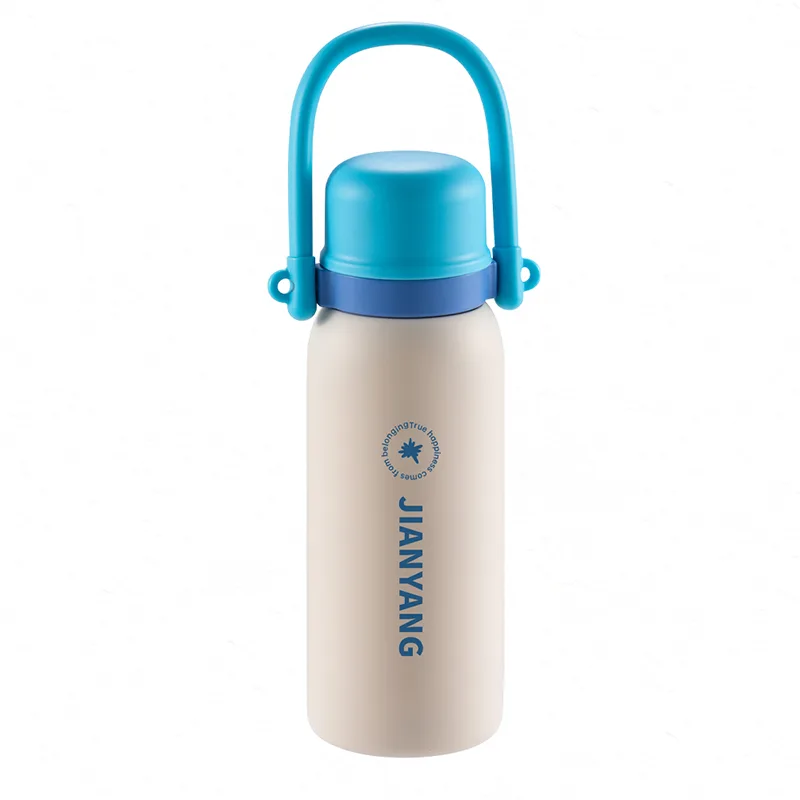
kids water bottle


Table of Contents

1. How Does a Leak-Proof Cap Prevent Water from Escaping?

2. What Cap Components and Specifications Should Buyers Compare?

3. Why Does Backpack Use Require More Than a Basic Leak Test?

4. How Can Buyers Verify Cap Quality Before Bulk Ordering?

5. Conclusion and Purchasing Recommendations

6. Frequently Asked Questions


How Does a Leak-Proof Cap Prevent Water from Escaping?

A leak-proof cap creates a controlled barrier between the liquid inside a bottle and the outside environment. When the cap is correctly installed, its sealing components close the potential paths through which water could escape. The effectiveness of this barrier depends on the relationship between the cap, gasket, bottle neck, closure mechanism, and manufacturing tolerances. For buyers sourcing Stainless Steel Water Bottles, understanding this relationship helps distinguish a well-engineered closure from a lid that merely feels tight when screwed into place.

How Does the Sealing Mechanism Work?

Most conventional screw caps use a combination of threaded engagement and a sealing interface. The threads guide the cap onto the bottle and help maintain its position. A gasket or sealing ring then compresses against a suitable surface, restricting the passage of liquid. Depending on the design, this sealing surface may be located at the bottle rim, inside the cap, or around a specially formed opening.

When the user tightens the cap, the components need to reach the intended seating position without damaging the seal or preventing proper closure. If the gasket is missing, twisted, poorly seated, or incompatible with the cap geometry, water may escape even when the threads appear fully engaged.

Four mechanisms deserve particular attention during procurement.

  • Thread engagement: The cap must engage with the bottle neck smoothly and reach its intended closed position. Damaged, poorly formed, or mismatched threads can interfere with sealing.
  • Gasket compression: The sealing ring must compress sufficiently to close the intended leakage path without being excessively crushed or displaced.
  • Contact-surface quality: The bottle rim and corresponding cap surface should be free from defects that could interrupt continuous contact with the gasket.
  • Closure retention: The cap should remain properly seated during normal handling and transportation, including movement inside a backpack.

These mechanisms work together. Strong threads cannot compensate for a damaged gasket, and a high-quality silicone ring cannot guarantee a reliable seal if the cap does not seat correctly against the bottle mouth.

Why Is the Silicone Sealing Ring So Important?

Silicone is commonly used for bottle gaskets because suitable silicone formulations can provide flexibility, resilience, and useful sealing properties. The gasket conforms to the intended contact surfaces when compressed, helping accommodate small variations that a rigid cap alone might not seal effectively.

However, not every silicone ring is interchangeable. Its diameter, cross-sectional shape, thickness, hardness, and installed position must match the closure design. A ring that is too small may fail to cover the sealing surface, while one that is too large may twist, protrude, or become displaced during assembly.

Closure feature Function What buyers should verify
Silicone gasket Forms a compliant barrier at the sealing interface Material specification, dimensions, hardness where specified, seating, and replacement requirements
Cap threads Guide and retain the cap in its closed position Thread compatibility, smooth engagement, dimensional consistency, and resistance to cross-threading
Bottle-mouth rim Provides the surface against which the cap assembly seals Surface finish, roundness, visible defects, and compatibility with the gasket
Cap body Houses and supports the sealing components Material, structural integrity, dimensional accuracy, and resistance to deformation under intended use
Drinking opening or secondary closure Controls liquid access in designs with additional openings Whether each opening has its own sealing interface and how it is secured when closed

What Causes a Bottle to Leak Even When Its Cap Is Tight?

A cap can feel secure without creating a complete seal. This is an important distinction for procurement teams because a simple hand-tightening demonstration does not establish leak resistance.

Consider a bottle filled for a daily commute. The user screws the cap into place, puts the bottle beside a laptop, and walks to a train station. If the gasket has folded during closure, the bottle may leak even though the cap remains attached. In another case, the gasket may be correctly positioned, but a damaged bottle rim creates a small discontinuity in the sealing surface. Both situations can produce an unsatisfactory result, despite the apparent quality of the external finish.

Common failure sources include the following.

  • A missing, cut, flattened, or incorrectly installed gasket.
  • Incompatible cap and bottle-neck dimensions.
  • Incomplete thread engagement or a cap that has been cross-threaded.
  • Uneven bottle-mouth surfaces, burrs, dents, or other manufacturing defects.
  • Excessive or insufficient closure force that prevents the seal from functioning as designed.
  • Wear, contamination, or damage around the sealing surface after repeated use.
  • Secondary drinking openings that remain incompletely closed.

How Should Buyers Define Leak-Proof Performance?

The term leak-proof should be linked to a defined test procedure and intended use. A bottle that passes a brief upright observation may still leak when laid horizontally or subjected to movement. Similarly, a closure that performs well with room-temperature water may require separate evaluation if the product is intended for hot liquids or other specific conditions.

Buyers should ask the supplier to specify the tested bottle model, cap configuration, gasket material, filling conditions, closure procedure, test duration, and acceptance criteria. If the product includes a flip-top spout, straw, or push-button lid, those components should be evaluated as part of the complete closure system rather than assuming that the primary cap seal covers every potential leakage path.

At Yongkang Jianyang Metal Co.,Ltd., the key purchasing principle is to assess the assembled bottle, not simply the individual components. For our product development and sourcing discussions, a clear specification helps align expectations between the buyer and supplier. This is particularly important for private-label orders, where a small change in the gasket or lid design can affect the performance of an otherwise unchanged bottle.

A well-designed closure should be easy to operate, repeatable in use, and suitable for the intended application. By checking the sealing mechanism, gasket fit, thread engagement, and test evidence together, buyers can make a more informed decision about whether a bottle is ready for backpack-oriented retail markets.


What Cap Components and Specifications Should Buyers Compare?

Choosing a bottle cap for a commercial order requires a balance of functional performance, material suitability, ease of use, durability, and manufacturing consistency. A lid may look attractive in a product photograph, but buyers need enough technical information to establish whether it can be manufactured repeatedly and perform as intended. For Stainless Steel Water Bottles, the cap specification should identify the actual construction and measurable requirements instead of relying on broad descriptions such as premium, durable, or fully sealed.

Which Cap Designs Are Worth Evaluating?

Different closure styles serve different user needs. A screw cap generally has a relatively straightforward closing mechanism, while a flip-top or push-button design may offer quicker access but introduce additional moving parts and sealing interfaces. A straw lid can improve drinking convenience, yet its straw opening and any venting components may require their own seals.

Cap style Typical construction Purchasing advantages Points requiring verification
Screw cap Threaded lid with a gasket or sealing surface Simple operation and relatively straightforward inspection Thread fit, gasket seating, closure torque where specified, and repeated opening performance
Flip-top lid Hinged cover with a closure latch and one or more seals Convenient access for frequent drinking Latch retention, hinge durability, spout sealing, and accidental opening resistance
Push-button lid Actuated opening mechanism with a separate closure feature Can support one-handed operation in suitable designs Locking function, button durability, mechanism contamination, and leakage paths
Straw lid Lid with a straw connection and potentially a vent or mouthpiece Convenient drinking without tilting the bottle as much Straw fit, valve design, vent sealing, cleaning access, and closure security
Wide-mouth screw lid Large opening with a compatible threaded cap and sealing interface Can simplify filling, adding ice, and cleaning Large gasket alignment, thread consistency, rim finish, and ease of tightening

These categories are general design descriptions. They do not establish that any particular cap is leak-proof, dishwasher-safe, or suitable for hot beverages. Those characteristics depend on the actual materials, construction, instructions, and supporting tests.

Which Technical Parameters Belong in a Purchasing Specification?

One of the most effective ways to compare quotations is to create a common technical specification sheet. Each supplier should quote against the same requirements so that differences in price can be considered alongside differences in construction and quality controls.

The following table provides a procurement framework. The entries are parameters to confirm with the manufacturer, not claimed factory specifications or measured performance values for a particular product.

Parameter Information to request Why it matters
Bottle capacity Nominal volume in milliliters or fluid ounces Determines the product's intended use and overall dimensions
Bottle body material Specified stainless steel grade and applicable material documentation Supports material verification and market-specific purchasing requirements
Insulation construction Single-wall or double-wall construction, with vacuum insulation where applicable Clarifies the bottle's intended thermal performance and design
Cap material Material identification for the lid, internal components, and any exposed metal parts Helps assess durability, intended contact with beverages, and compatibility
Gasket material Material grade or specification, dimensions, and relevant compliance documentation Helps establish sealing compatibility and suitability for intended use
Bottle-mouth dimensions Neck diameter, thread details, and sealing-surface dimensions where applicable Supports correct cap fit and repeatable assembly
Leak test Method, orientation, duration, filling conditions, sample quantity, and pass criteria Provides a defined basis for evaluating leakage performance
Closure durability Opening and closing cycle requirements, if specified Helps assess performance after repeated everyday use
Product dimensions and weight Finished dimensions and net weight, with agreed tolerances Supports packaging, freight planning, and backpack usability
Packaging Individual packaging, carton dimensions, protective materials, and labeling requirements Reduces the risk of transit damage and supports retail presentation

How Should Buyers Assess Silicone Gasket Quality?

Gasket selection deserves its own review because the seal is a functional component rather than a decorative accessory. A supplier should be able to identify the specified material and explain how its dimensions relate to the cap and bottle-mouth geometry. Where food-contact compliance is required, the buyer should request documentation applicable to the actual material, market, and conditions of use.

During sample inspection, check whether the gasket sits evenly in its groove and remains in place when the cap is removed and reinstalled. Look for cuts, uneven edges, contamination, deformation, or signs that the ring has been stretched to fit. A removable gasket may make cleaning easier, but the design should also make correct reinstallation practical for the end user.

It is also worth asking how replacement seals are handled. If the gasket is intended to be replaceable, confirm whether replacement parts will be available and whether the product instructions explain how to install them. If the seal is not designed for user removal, the care instructions should make that limitation clear.

How Do Material Compliance and Temperature Requirements Affect Sourcing?

Material suitability depends on the product's intended use and the destination market. Buyers should not assume that a stainless steel body automatically makes every cap, gasket, coating, or internal component suitable for every beverage and temperature. Each relevant component needs to be assessed according to its intended contact, temperature exposure, and applicable requirements.

For bottles marketed for hot beverages, confirm the manufacturer's stated temperature limits and whether the cap mechanism is suitable for the intended conditions. Pressure can build up in some closed containers depending on the contents and temperature, so product instructions should clearly explain any restrictions on hot liquids, carbonation, or other uses not supported by the design.

For export orders, request the relevant test reports or declarations rather than accepting a general statement that the product meets international standards. The exact requirements will depend on the destination market, product configuration, and applicable regulations.

Our procurement checklist should therefore cover the bottle body, closure, gasket, material documentation, and packaging as a complete product system. Yongkang Jianyang Metal Co.,Ltd. should be referenced in the purchasing documents using the agreed supplier identity, while the specific material grades, dimensions, and performance requirements are recorded separately as verified product data.

Ultimately, the strongest quotation is not necessarily the one with the lowest unit cost. A competitive offer should provide enough technical clarity for the buyer to compare products fairly, evaluate risks, and confirm that the selected design matches the target market's expectations.


Why Does Backpack Use Require More Than a Basic Leak Test?

A water bottle inside a backpack experiences a different set of conditions from a bottle standing upright on a desk. During a commute, the bottle may be tilted, placed horizontally, squeezed between other objects, or moved repeatedly as the wearer walks. The cap may also be exposed to incidental contact with books, clothing, charging cables, or other items packed nearby. A backpack-friendly bottle therefore needs a closure system that performs reliably under the realistic conditions specified for its intended use.

What Happens to a Bottle During Everyday Transportation?

Backpack use introduces several variables that a simple upright leak check may not reveal. The bottle can change orientation many times, while movement can cause liquid to contact different parts of the cap. If the closure has a drinking spout, a vent, or a separate locking mechanism, each feature may create another potential leakage path.

Consider a student carrying a stainless steel bottle in the same compartment as a notebook and tablet. Even a small leak can damage paper or electronics, creating a problem disproportionate to the amount of water lost. For an outdoor retailer, similar concerns arise when customers pack bottles alongside maps, clothing, food, or other equipment.

Several product characteristics help reduce these risks when correctly designed and verified.

  • Reliable sealing: The gasket and sealing surfaces should maintain the intended barrier when the bottle is closed correctly.
  • Secure cap retention: The cap should remain attached and seated during normal transportation and handling.
  • Protection against accidental opening: For flip-top or push-button closures, evaluate whether the mechanism can be activated unintentionally inside a bag.
  • Suitable bottle geometry: Dimensions and shape should fit the intended bag compartments without making the bottle unnecessarily difficult to retrieve.
  • Durable closure components: Hinges, latches, threads, and gaskets should tolerate the expected handling and use conditions.
  • Practical cleaning: Components that contact beverages should be accessible for cleaning according to the product's instructions, especially where the lid includes narrow channels or moving parts.

How Should Backpack-Oriented Leak Testing Be Designed?

A useful leak-test protocol starts with the actual product configuration. The bottle should be assembled according to the manufacturer's instructions, using the specified cap and gasket. The test plan should then define the fill level, liquid, closure procedure, orientation, observation period, and pass or fail criteria.

For many general-purpose bottles, buyers may wish to evaluate upright, horizontal, and inverted orientations, where appropriate for the design. These checks should be conducted under controlled conditions and should not be interpreted as a substitute for any required standardized test. The objective is to identify likely leakage paths and establish repeatable evidence of performance.

A structured evaluation can include the following stages.

  1. Baseline inspection: Confirm that the bottle, cap, gasket, and drinking components are correctly assembled and free from visible damage.
  2. Initial closure check: Close the bottle using the prescribed procedure and confirm that the lid reaches its intended position without abnormal resistance.
  3. Static orientation checks: Place the bottle in the specified orientations for a defined period and inspect for visible leakage.
  4. Movement evaluation: Where appropriate, use a controlled movement procedure representative of the intended application. Avoid informal shaking methods that vary from one sample to another.
  5. External inspection: Examine the cap, seams, spout, vent, and other openings for escaping liquid.
  6. Post-test inspection: Check for displaced gaskets, loose components, damage, or changes in closure operation.
  7. Documentation: Record the model, sample identification, conditions, results, and any failures so that the evaluation can be repeated.

For a more meaningful comparison, all suppliers should be evaluated using the same test conditions. A test lasting a few seconds should not be compared directly with a longer observation period, and a test conducted with an empty bottle should not be treated as equivalent to one conducted with a filled bottle.

What Role Does Backpack Fit Play in Product Selection?

Leak prevention is only one aspect of backpack compatibility. A bottle that seals well but is too wide for a common side pocket may be inconvenient for the intended audience. A tall, narrow design may fit certain compartments better, while a broad bottle may be more stable when placed on a flat surface. These design trade-offs should be considered alongside closure performance.

For buyers, the useful specifications include overall height, maximum body diameter, base diameter, cap diameter, and finished weight. Where a handle or carrying loop is included, its dimensions and position may affect how easily the bottle fits into a bag. The buyer should also assess whether protruding lid components are likely to catch on fabric or interfere with neighboring items.

Packaging can influence the customer experience as well. Protective packaging should reduce the risk of dents, scratches, and closure damage during shipment. Carton configuration should be agreed in advance so that bottles arrive in a condition consistent with the approved sample.

How Do Closure Style and User Behavior Interact?

A cap is only effective when the user closes it correctly. Screw caps typically require the user to engage the threads and tighten the lid to its intended position. Flip-top lids may require both the cover and locking mechanism to be fully engaged. Push-button lids may include a lock that needs to be activated before the bottle is packed.

These operating differences affect product suitability. A design intended for children, commuters, or people who drink frequently throughout the day may need an intuitive opening and closing process. However, convenience features should not be assumed to improve leak resistance automatically. Each additional hinge, valve, opening, or movable component needs to be evaluated as part of the complete closure.

Buyers should therefore conduct a usability review alongside leak testing. Ask representative users to open, close, carry, and clean the sample according to the intended instructions. Record whether the cap is easy to operate, whether the locking mechanism is obvious, and whether any part is difficult to reinstall correctly.

How Can Buyers Turn Backpack Requirements into Product Specifications?

The most useful purchasing brief describes a realistic customer scenario rather than simply requesting a leak-proof bottle. For example, a commuter-oriented design may need to fit a defined backpack pocket, resist leakage in specified orientations, and offer a closure that remains secure during ordinary movement. A hiking-oriented design may have different requirements for capacity, handling, durability, and cleaning.

Yongkang Jianyang Metal Co.,Ltd. can be included in the supplier communication and sample approval process, while the buyer's actual technical requirements should be documented independently. For our purchasing process, the approved sample should be linked to the product drawing, component specification, leak-test procedure, and packaging requirements. Any change to the cap, gasket, neck dimensions, or closure mechanism should be reviewed before it is implemented in mass production.

This approach allows buyers to connect customer expectations with verifiable manufacturing controls. Instead of relying on a broad backpack-friendly claim, they can assess whether the product fits the intended compartment, whether the closure is convenient, and whether the assembled bottle meets the agreed leakage criteria.

A dependable backpack bottle is the result of coordinated design decisions. The closure must seal, the locking mechanism must work as intended, the body must suit the customer's carrying needs, and the complete product must be validated under relevant conditions. Evaluating these factors together gives purchasing teams a stronger basis for choosing a product that is practical as well as commercially competitive.


How Can Buyers Verify Cap Quality Before Bulk Ordering?

Before approving a large order, buyers need evidence that the selected bottle can be manufactured consistently and that the closure will perform as agreed. A successful sample is a useful starting point, but it does not automatically guarantee that every unit in a production run will have the same gasket fit, thread quality, or sealing performance. A sound sourcing process therefore connects sample approval with written specifications, incoming material controls, assembly checks, and an agreed final inspection plan.

What Should Be Checked During Pre-Production Sample Approval?

The pre-production sample should represent the actual design intended for mass production. If the supplier uses a temporary cap, substitute gasket, or different bottle-neck construction for the sample, the result may not accurately reflect the final product. Buyers should identify the approved version and ensure that the same essential components are used in production.

The initial review should cover the following areas.

  • Product identity: Confirm the style number, capacity, dimensions, finish, and cap configuration.
  • Material identification: Check the documented stainless steel grade, cap material, gasket specification, and any other relevant component materials.
  • Fit and finish: Inspect the bottle-mouth rim, threads, cap seating surface, and gasket installation for visible defects.
  • Opening and closing: Confirm that the cap operates as intended without unusual resistance, misalignment, or unintended release.
  • Leak performance: Conduct the agreed test procedure and document the conditions and results.
  • Usability: Check handling, drinking access, cleaning, and the practical ease of reinstalling removable components.
  • Packaging: Verify the proposed individual packaging, protective materials, labeling, and carton configuration.

Photographs can support the approval record, but they should not replace the physical sample or performance test when those are necessary. If the buyer and supplier are in different countries, retain an identified reference sample and a controlled specification so that both parties can refer to the same approved design.

How Can Production Quality Be Controlled?

Production controls should focus on the characteristics that can affect safety, leakage, function, and consistency. The exact controls depend on the manufacturing process and agreed risk level, but a written quality plan commonly distinguishes incoming component checks, in-process inspection, and final product verification.

Inspection stage Checks to consider Purchasing objective
Incoming materials Component identity, material documentation, gasket dimensions, and visible damage Identify unsuitable components before assembly
Assembly process Cap fit, gasket placement, thread engagement, and assembly consistency Reduce errors that could create leakage paths
In-process inspection Dimensional checks, appearance, and closure operation Detect deviations before the full order is completed
Leak verification Testing under the agreed conditions and acceptance criteria Confirm the required sealing performance
Final inspection Product appearance, closure function, agreed performance checks, and packaging Verify conformity before shipment
Change management Review of material, component, tooling, or design substitutions Prevent unapproved changes from affecting the approved product

Not every unit necessarily requires the same laboratory test. The buyer and supplier should agree on the sampling method, inspection frequency, and any lot acceptance rules based on the product's requirements and risks. If a critical leakage requirement cannot be adequately verified through visual checks, the inspection plan should include a suitable functional test.

What Should Importers Ask a Potential Supplier?

A focused supplier discussion can reveal whether a manufacturer understands the closure requirements and can support consistent production. Questions should address technical capabilities, quality documentation, communication, and order execution rather than focusing only on the quoted price.

  • Can the supplier identify the bottle body, cap, gasket, and other relevant materials in writing?
  • Can the supplier provide dimensioned drawings or a specification sheet for the selected model?
  • What leak-test method is used, and what conditions and acceptance criteria apply?
  • How are gasket installation, thread fit, and closure operation checked during production?
  • What is the process for approving changes to materials or cap components?
  • Which product compliance documents and test reports are available for the destination market?
  • Can the supplier support the required packaging, private-label branding, and order quantity?
  • What inspection records can be provided before shipment, and how are defects handled?

Answers should be supported by relevant documents or demonstrated processes where appropriate. A confident verbal statement is useful for starting a discussion, but it should not replace technical evidence for a performance claim.

How Should Buyers Compare Total Purchasing Value?

Unit price is important, but the total commercial value also depends on component consistency, defect risk, packaging, inspection costs, freight efficiency, and after-sales support. A low-priced cap that requires frequent replacement or generates leakage complaints can create additional costs throughout the supply chain.

When comparing quotations, ensure that the products have the same capacity, body construction, cap style, gasket specification, packaging scope, and testing requirements. If one quotation excludes testing or uses a different closure design, the prices may not be directly comparable.

Buyers should also clarify the order quantity, sample lead time, production lead time, payment terms, branding requirements, and shipping arrangements before confirming the purchase. These details help reduce avoidable misunderstandings after the product design has been approved.

How Can Private-Label Buyers Protect Product Consistency?

Private-label projects introduce additional requirements because the product must match the buyer's brand presentation as well as the agreed technical specification. Logo placement, color matching, packaging, and labeling should be approved alongside the functional design. Any branding process that changes the cap surface, adds components, or affects the closure geometry should be reviewed for compatibility.

The approved sample should be clearly identified and retained as a reference. The technical file should include the product drawing, material details, cap and gasket specification, leak-test method, inspection criteria, and approved packaging artwork. If a change is needed because of material availability or manufacturing constraints, the supplier should notify the buyer and obtain approval before implementation.

Yongkang Jianyang Metal Co.,Ltd. is the supplier identity specified for this purchasing guide. Buyers should confirm the company's current product offerings, production capabilities, and available documentation directly during supplier qualification rather than treating general product descriptions as proof of a specific factory process or certification.

Our recommended sourcing process is built around clear expectations and verifiable evidence. By combining a representative sample, defined acceptance criteria, documented component specifications, and a practical inspection plan, buyers can reduce uncertainty before committing to a commercial order.

The objective is not to make procurement unnecessarily complicated. It is to ensure that the bottle delivered to the warehouse matches the bottle approved during development. For products marketed as backpack-friendly, that means verifying closure performance and usability in addition to appearance, material selection, and cost.


Conclusion and Purchasing Recommendations

Leak-proof caps help make Stainless Steel Water Bottles backpack-friendly by reducing the risk of water escaping when the bottle is closed correctly and used under its intended conditions. Reliable performance depends on the complete closure system, including the cap body, gasket, threads, bottle-mouth finish, and any additional drinking openings. Bottle dimensions, closure security, cleaning requirements, and material suitability also influence whether the finished product meets customer expectations.

For importers and private-label buyers, the most effective approach is to define the target use case before selecting the cap. Confirm the component materials and dimensions, request relevant test evidence, approve a representative sample, and establish a written inspection plan for mass production. Leak testing should use repeatable conditions and clearly defined acceptance criteria rather than informal demonstrations or unsupported marketing claims.

Our purchasing recommendations emphasize technical clarity, sample verification, and consistency between the approved design and delivered goods. A competitive quotation should be evaluated against equivalent specifications, including cap configuration, gasket construction, product dimensions, packaging, and agreed quality checks. These steps help buyers make informed decisions while reducing the likelihood of avoidable returns and customer complaints.

For sourcing inquiries, private-label projects, or product comparisons, contact Yongkang Jianyang Metal Co.,Ltd. to discuss the required bottle capacity, stainless steel construction, preferred cap style, gasket requirements, branding, packaging, and destination market. Share the intended use and any specific leak-testing or compliance requirements so that the product proposal can be evaluated against your purchasing brief. A clearly defined specification is the best starting point for developing a reliable bottle range and building a productive long-term supply relationship.


Frequently Asked Questions

1. How do leak-proof caps prevent Stainless Steel Water Bottles from leaking inside a backpack?

Leak-proof caps use a sealing interface, commonly involving a gasket or silicone ring, to close the gap between the lid and bottle mouth. Proper thread engagement or another secure closure mechanism keeps the cap in its intended position, while compatible sealing surfaces help prevent liquid from escaping. Buyers should verify the complete assembled bottle under defined orientation and movement conditions because an upright leak check alone cannot establish performance in every backpack-use scenario.


2. Which gasket material should buyers choose for a leak-proof stainless steel water bottle cap?

The appropriate gasket material depends on the bottle's intended beverage, temperature range, cleaning method, closure design, and destination-market requirements. Silicone is commonly used because suitable formulations offer flexibility and resilience, but its dimensions, hardness, compatibility, and relevant compliance documentation still need to be verified. Buyers should request the material specification and applicable evidence rather than assuming that every silicone gasket is suitable for every application.


3. What leak tests should be completed before ordering backpack-friendly water bottles in bulk?

Buyers should agree on a repeatable test procedure that identifies the bottle model, cap configuration, gasket, filling conditions, closure method, orientation, observation period, and pass or fail criteria. Depending on the intended use, evaluation may include upright, horizontal, or inverted positions and a controlled movement assessment. The results should be documented against the approved specification, and any required standardized testing should be conducted using an appropriate method for the product and target market.


4. Why can a stainless steel water bottle leak even when its lid is tightly closed?

A tightly closed lid can still leak if the gasket is damaged, missing, twisted, or incorrectly sized, or if the bottle-mouth surface and cap do not fit together correctly. Cross-threading, incomplete closure, worn seals, and unsecured secondary drinking openings can also create leakage paths. Buyers should inspect the complete closure assembly and use a controlled leak test to identify the cause instead of assuming that greater tightening force will solve the problem.


5. What specifications should importers request when sourcing backpack-friendly Stainless Steel Water Bottles?

Importers should request the nominal capacity, stainless steel grade, body construction, finished dimensions, net weight, cap material, gasket specification, bottle-neck and thread details where applicable, and the agreed leak-test method. The purchasing file should also define packaging, branding, inspection criteria, relevant compliance documentation, and approval procedures for material or design changes. These records make supplier quotations easier to compare and help ensure that bulk production remains consistent with the approved sample.

Related News
Leave me a message
X
We use cookies to offer you a better browsing experience, analyze site traffic and personalize content. By using this site, you agree to our use of cookies. Privacy Policy
RejectAccept