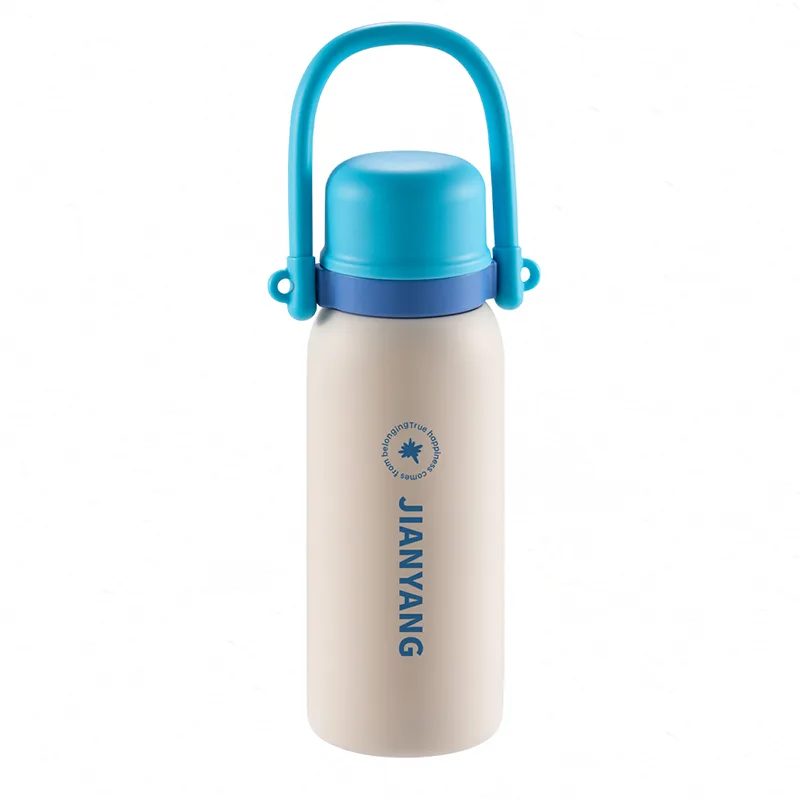
Every day, millions of people reach for their stainless steel water bottles, filling them, carrying them, and drinking from them. Some of these bottles have been in daily use for five, ten, or even fifteen years. They have been dropped on concrete floors, thrown into backpacks, subjected to temperature extremes, and washed hundreds of times. Yet they remain functional, leak-proof, and safe. This is not an accident of manufacturing; it is the result of deliberate material selection and precision fabrication processes. A stainless steel water bottle is not simply a piece of metal formed into a cylinder—it is a carefully engineered product designed to withstand the rigors of daily life.
This article examines how stainless steel water bottles support long-term, repeated daily use from a technical perspective. The focus is on the underlying Sheet Metal Fabrication processes that transform flat steel sheets into finished products. We will analyze the material properties of different stainless steel grades, the forming techniques that create the bottle shape, the joining methods that ensure leak-proof seams, and the finishing processes that protect the surface. Each of these fabrication steps directly contributes to the bottle's ability to survive daily use without degrading in performance or safety. Understanding this fabrication process is essential for designers, engineers, and quality control professionals seeking to optimize product life and reliability.
The starting point for any stainless steel water bottle is the raw material—a coil of stainless steel sheet. The choice of stainless steel grade determines the bottle's corrosion resistance, mechanical strength, formability, and cost. For water bottle applications, the most common grades are 304, 316, and 430. Each has distinct characteristics that make it suitable for different applications and price points.
Grade 304 is the most widely used austenitic stainless steel in food and beverage applications. It contains 18% chromium and 8% nickel, providing excellent corrosion resistance and good formability. Grade 316 adds molybdenum, which enhances resistance to chlorides and acids, making it suitable for marine or highly aggressive environments. Grade 430 is a ferritic stainless steel that is less expensive but has lower corrosion resistance and formability. The choice of material directly impacts the bottle's ability to withstand daily use, including exposure to acidic beverages, repeated washing, and physical impacts.
In the sheet metal fabrication process, the material properties of the selected steel grade affect every subsequent manufacturing step. The forming behavior of the sheet during deep drawing is influenced by the material's elongation, yield strength, and work hardening rate. The weldability of the material determines the integrity of the seam. The surface finish options available are also limited by the material's response to polishing and coating processes. To illustrate the differences, the following table compares the key properties of common stainless steel grades used for water bottle fabrication.
| Property | Grade 304 | Grade 316 | Grade 430 |
| Corrosion Resistance | Excellent | Superior | Good |
| Formability | Excellent | Good | Fair |
| Weldability | Excellent | Excellent | Good |
| Nickel Content | 8% | 10-14% | 0% |
| Chromium Content | 18% | 16-18% | 16-18% |
| Resistance to Acids | Excellent | Superior | Good |
| Relative Cost | Medium | High | Low |
At Yongkang Jianyang Metal Co.,Ltd., we primarily use Grade 304 for our stainless steel water bottles, balancing corrosion resistance, formability, and cost. For applications requiring higher corrosion resistance, we offer Grade 316 options. The sheet metal fabrication process is optimized for each grade, ensuring that the final product meets the required performance standards. The selection of the appropriate material is the first and most critical decision in the fabrication process, directly influencing the bottle's long-term durability in daily use.
Deep drawing is the core sheet metal fabrication process used to form the body of a stainless steel water bottle. A flat, circular blank of stainless steel sheet is placed over a die and pressed into shape by a punch, forming a seamless cup or shell. This process is repeated in multiple stages, progressively reducing the diameter and increasing the height of the part until the final bottle shape is achieved. The deep drawing process is fundamental to the bottle's durability because it produces a seamless, continuous body without welded seams, eliminating potential failure points.
The technical challenges of deep drawing for stainless steel water bottles are significant. The material must be drawn without tearing or wrinkling. The wall thickness must remain consistent throughout the part, and the final dimensions must be precise. The process requires careful control of several parameters: the blank holder pressure, the punch speed, the lubrication, and the temperature. The tooling design—the punch and die geometry—must be optimized for the specific material grade and the desired final shape. The following table summarizes the key parameters that must be controlled during the deep drawing process.
| Parameter | Control Range | Impact on Quality |
| Blank Holder Pressure | 5-15 MPa | Controls wrinkling; excessive pressure causes thinning |
| Punch Speed | 5-20 mm/s | Affects material flow and lubrication effectiveness |
| Lubrication Type | Mineral oil / Synthetic | Reduces friction and prevents galling |
| Punch to Die Clearance | 1.05-1.10 x material thickness | Determines final wall thickness uniformity |
| Number of Drawing Stages | 3-6 stages (depending on depth) | More stages improve formability but increase cost |
The deep drawing process imparts work hardening to the material, increasing its strength. This is beneficial for the bottle's durability, as the formed part is stronger than the original flat sheet. However, work hardening also makes the material more difficult to form in subsequent stages, requiring intermediate annealing processes to restore ductility. The annealing step involves heating the partially formed part to a specific temperature (typically 1000-1100°C) and then cooling it rapidly. This process relieves internal stresses and recrystallizes the grain structure, restoring the material's formability for the next drawing stage.
The technical skill of the deep drawing process directly affects the bottle's ability to survive daily use. A properly drawn part will have consistent wall thickness, no cracks or wrinkles, and a smooth surface. A poorly drawn part will have thin spots that can crack under impact, wrinkles that create stress concentrations, and surface defects that can propagate into cracks. Our factory at Yongkang Jianyang Metal Co.,Ltd. has developed deep drawing expertise over decades of manufacturing stainless steel water bottles, allowing us to produce parts with consistent quality and durability. We use advanced CNC-controlled drawing presses and high-quality tooling to ensure each part meets the required specifications.
While the main body of a stainless steel water bottle is formed by deep drawing, other components such as the neck, the bottom cap, and the attachment points for handles or loops may require welding. The integrity of these welded joints is critical to the bottle's long-term durability, as a failed weld will cause leakage and render the bottle unusable. The welding process used in sheet metal fabrication for water bottles must produce joints that are as strong as the base material and resistant to corrosion.
The most common welding technique for stainless steel water bottles is Tungsten Inert Gas (TIG) welding. TIG welding uses a non-consumable tungsten electrode to produce the arc, with an inert gas (typically argon) shielding the weld pool from atmospheric contamination. This process produces high-quality, clean welds with good mechanical properties. Laser welding is also used for applications requiring very precise and narrow welds. Both processes require precise control of the welding parameters to achieve the desired joint integrity.
The key welding parameters that affect joint integrity are:
The table below provides typical welding parameters for stainless steel water bottle components.
| Parameter | TIG Welding | Laser Welding |
| Current (Amps) | 40-80 A | 50-200 W |
| Travel Speed | 50-200 mm/min | 500-2000 mm/min |
| Shielding Gas | Argon (100%) | Argon or Helium |
| Gas Flow Rate | 5-15 L/min | 5-10 L/min |
| Joint Preparation | Clean, deburred | Clean, precise fit-up |
| Penetration Depth | 1-2 mm | 0.5-1.5 mm |
The quality of the welded joint is verified through visual inspection, pressure testing, and, in some cases, destructive testing. A leak-proof seal is essential for the bottle's function, and the weld must be capable of withstanding repeated pressurization cycles as the bottle is filled and emptied. At Yongkang Jianyang Metal Co.,Ltd., we use automated welding equipment with closed-loop control systems to ensure consistent weld quality. Each bottle is pressure-tested to verify the integrity of the welded joints, ensuring that the bottle can withstand daily use without developing leaks.
The surface finish of a stainless steel water bottle is not merely an aesthetic consideration; it directly affects the bottle's durability and hygiene. A smooth, passive surface is more resistant to corrosion and easier to clean. The sheet metal fabrication process includes several surface treatment steps that enhance the bottle's resistance to the rigors of daily use.
The first step in surface finishing is the removal of surface contaminants, such as oils, greases, and metallic particles. This is typically accomplished through a series of cleaning and degreasing operations, using alkaline or solvent-based cleaning agents. The cleaned part is then subjected to surface treatment processes that enhance its corrosion resistance and appearance. The three most common surface treatments for stainless steel water bottles are passivation, electropolishing, and mechanical polishing.
Passivation is a chemical treatment that removes free iron from the surface of the stainless steel, allowing a chromium-rich oxide layer to form. This passive layer is what gives stainless steel its corrosion resistance. Passivation is essential for maintaining the material's resistance to corrosion during daily use, as it prevents the formation of rust spots. Electropolishing is an electrochemical process that removes a thin layer of material from the surface, smoothing the surface and improving its brightness. Electropolished surfaces are more resistant to corrosion and easier to clean. Mechanical polishing uses abrasive materials to create a bright, reflective surface. While it can create a very attractive finish, mechanical polishing does not provide the same level of corrosion resistance as passivation or electropolishing.
The table below compares the key characteristics of the different surface finishing processes.
| Process | Corrosion Resistance | Surface Finish | Cost | Typical Application |
| Passivation | Excellent | Matte (original) | Low | All water bottles, essential step |
| Electropolishing | Superior | Bright, smooth | Medium | Premium bottles, hygiene-critical |
| Mechanical Polishing | Good | Mirror-like | High | Decorative, high-end products |
| Brushed Finish | Good | Satin | Medium | Scratch-resistant, industrial look |
In addition to the surface treatment, the design of the bottle can incorporate features that enhance its durability. For example, a recessed bottom protects the bottle from impacts when set down. A protective coating, such as a powder coat or a paint finish, can be applied to the exterior to provide additional resistance to scratches and wear. At Yongkang Jianyang Metal Co.,Ltd., we offer a range of surface finishing options to meet the specific requirements of our customers. Our standard finish for water bottles is passivation, which provides an excellent combination of corrosion resistance and cost-effectiveness. For customers requiring a more decorative finish, we offer electropolishing and brushed finishes.
Beyond the material and manufacturing processes, the design of the stainless steel water bottle includes specific features that enable repeated daily use. These features are integrated into the sheet metal fabrication process, and they directly contribute to the bottle's long-term performance. The design of the opening, the attachment points for lids and loops, and the geometry of the bottom are all critical to the bottle's durability.
The most important design feature is the threaded neck that accepts the lid. The neck must be precisely formed to create a leak-proof seal with the lid. The threads must be strong enough to withstand repeated tightening and loosening without stripping. The design of the neck is typically achieved through a series of drawing and threading operations during the sheet metal fabrication process. The neck must also be compatible with the lid material, which is often plastic or another metal. The interface between the neck and the lid is the primary potential leak path, and the design must ensure a reliable seal over thousands of open-close cycles.
The design of the bottom of the bottle is another critical feature. A flat, stable bottom allows the bottle to stand upright without tipping over. A recessed bottom protects the base from damage when the bottle is set down on hard surfaces. The bottom of the bottle is formed during the deep drawing process, and the geometry of the bottom must be designed to provide adequate stability. The wall thickness at the bottom must also be sufficient to withstand impacts without deforming.
The attachment point for a handle or a carrying loop is also a feature that must be designed for durability. This attachment point must be able to withstand the weight of the bottle when full and the dynamic loads from swinging or carrying. The attachment point is typically formed by welding a small loop or bracket to the bottle body. The weld must be strong enough to support the weight of the bottle without failing. The design of the attachment point must also consider the ergonomics of carrying the bottle.
The table below summarizes the key design features that contribute to the durability of stainless steel water bottles.
| Design Feature | Function | Fabrication Method | Durability Contribution |
| Threaded Neck | Secure lid attachment | Drawing + Threading | Leak-proof seal, repeated opening/closing |
| Recessed Bottom | Protection from impacts | Deep Drawing | Prevents bottom damage from setting down |
| Carrying Loop Attachment | Portability | Welding | Supports weight without failure |
| Flared Opening | Ease of drinking | Drawing + Trimming | Reduces spillage, improves user experience |
| Ribbed Surface (Optional) | Improved grip | Drawing or Hydroforming | Prevents drops and impact damage |
At Yongkang Jianyang Metal Co.,Ltd., we incorporate these design features into our stainless steel water bottles based on extensive user experience data. Our design team works closely with our fabrication engineers to ensure that the features are manufacturable and meet the required durability standards. The result is a product that is not only functional but also built to last through years of daily use.
Ensuring that a stainless steel water bottle can withstand long-term daily use requires a rigorous quality control and testing program. The quality control process begins with the incoming material and continues through each stage of the sheet metal fabrication process. The testing program verifies that the finished product meets the required standards for strength, durability, and hygiene. The quality control program is essential for ensuring product consistency and for identifying any defects before the product reaches the customer.
The incoming material is inspected for thickness, surface quality, and material certification. The material thickness is verified using a micrometer or an ultrasonic thickness gauge. The surface is inspected for defects such as scratches, pits, or rolling marks. The material certification verifies that the steel meets the specified grade requirements. During the deep drawing process, the parts are inspected for defects such as cracks, wrinkles, or thin spots. The dimensions of the drawn part are measured to ensure they meet the required tolerances. The welding process is monitored using process control charts and is inspected for weld quality. The surface finishing process is inspected for appearance and corrosion resistance.
The testing program for finished stainless steel water bottles includes:
The table below summarizes the key tests performed on stainless steel water bottles.
| Test | Test Method | Acceptance Criterion | Purpose |
| Leak Test | Air pressurization (1.5x working pressure) | No leak for 2 minutes | Verify seal integrity |
| Drop Test | Drop from 1.2m height | No cracks, no leaks | Verify impact resistance |
| Thermal Cycling | 10 cycles: 20°C to 100°C to 20°C | No cracking, no leaks | Verify thermal stress resistance |
| Corrosion Test | Salt spray (24 hours, 5% NaCl) | No rust or pitting | Verify corrosion resistance |
| Cycle Test | 10,000 open/close cycles | No leak, no thread damage | Verify lid durability |
At Yongkang Jianyang Metal Co.,Ltd., we have implemented a comprehensive quality control system that includes these tests and inspections. Our quality control team is responsible for ensuring that every product meets the required standards. The test results are documented and reviewed, providing a continuous feedback loop for process improvement. This commitment to quality ensures that our stainless steel water bottles can withstand the rigors of daily use for many years.
Question 1: What is the difference between 304 and 316 stainless steel for water bottles?
Answer: Both 304 and 316 stainless steel are food-grade materials suitable for water bottles. The primary difference is that 316 stainless steel contains molybdenum (2-3%), which enhances its resistance to chloride corrosion. This makes 316 better suited for environments with high salt content or aggressive chemicals. For most daily use applications, 304 stainless steel provides excellent corrosion resistance at a lower cost. Both materials are safe for drinking water and will not leach harmful substances.
Question 2: How long does a typical stainless steel water bottle last with daily use?
Answer: With proper care, a high-quality stainless steel water bottle can last 10-15 years or more. The lifespan depends on the quality of the materials and manufacturing, the conditions of use, and the maintenance provided. Factors that can reduce lifespan include frequent dropping, exposure to extremely corrosive environments, and neglect of cleaning. Our factory at Yongkang Jianyang Metal Co.,Ltd. manufactures water bottles designed for a service life of 10+ years under normal daily use conditions.
Question 3: Can stainless steel water bottles be recycled?
Answer: Yes, stainless steel water bottles are fully recyclable. Stainless steel is one of the most recycled materials globally, with a high recycling rate. When a stainless steel water bottle reaches the end of its life, it can be recycled into new steel products without loss of quality. This is a significant environmental advantage over plastic bottles, which often end up in landfills. The recycling process recovers the chromium, nickel, and iron content of the steel, conserving natural resources.
Question 4: What are the critical quality control points in stainless steel water bottle manufacturing?
Answer: The critical quality control points include: incoming material inspection (thickness, surface quality), deep drawing quality (no wrinkles, cracks, or thin spots), weld integrity (no leaks, no defects), surface finish quality (no scratches or corrosion), and final assembly verification (leak testing, drop testing). Each of these points is critical to ensuring the long-term durability of the product. At Yongkang Jianyang Metal Co.,Ltd., we maintain detailed quality control records for every production batch.
Question 5: How does the deep drawing process affect the durability of the water bottle?
Answer: The deep drawing process determines the structural integrity of the bottle. A properly drawn bottle will have consistent wall thickness, no internal stresses, and no defects. This results in a bottle that can withstand impacts and pressure without cracking or deforming. The deep drawing process also creates a seamless body, eliminating potential leak points that would exist in a welded assembly. The process parameters (blank holder pressure, punch speed, lubrication) must be carefully controlled to achieve optimal results.
The ability of stainless steel water bottles to support long-term repeated daily use is the result of careful material selection, precise sheet metal fabrication, and rigorous quality control. The deep drawing process creates a seamless, robust body that can withstand impacts and pressure. The welding process ensures leak-proof joints. The surface finishing processes protect against corrosion and enhance hygiene. The design features are optimized for repeated use. Each of these elements is essential to the bottle's performance and durability.
At Yongkang Jianyang Metal Co.,Ltd., we have developed expertise in the sheet metal fabrication of stainless steel water bottles over decades of manufacturing. Our commitment to quality and process control ensures that our products meet the highest standards of durability and safety. Whether you are a brand seeking a reliable supplier of premium water bottles, or a retailer looking for durable and sustainable products, our stainless steel water bottles are built to last.
Contact Yongkang Jianyang Metal Co.,Ltd. today to learn more about our stainless steel water bottle manufacturing capabilities and how our sheet metal fabrication expertise can support your product needs.